Acetal vs Nylon vs HDPE: Industrial Plastics
A practical comparison of three common industrial plastics. When to use acetal (Delrin), nylon, or HDPE by mechanical properties, environment, and application.
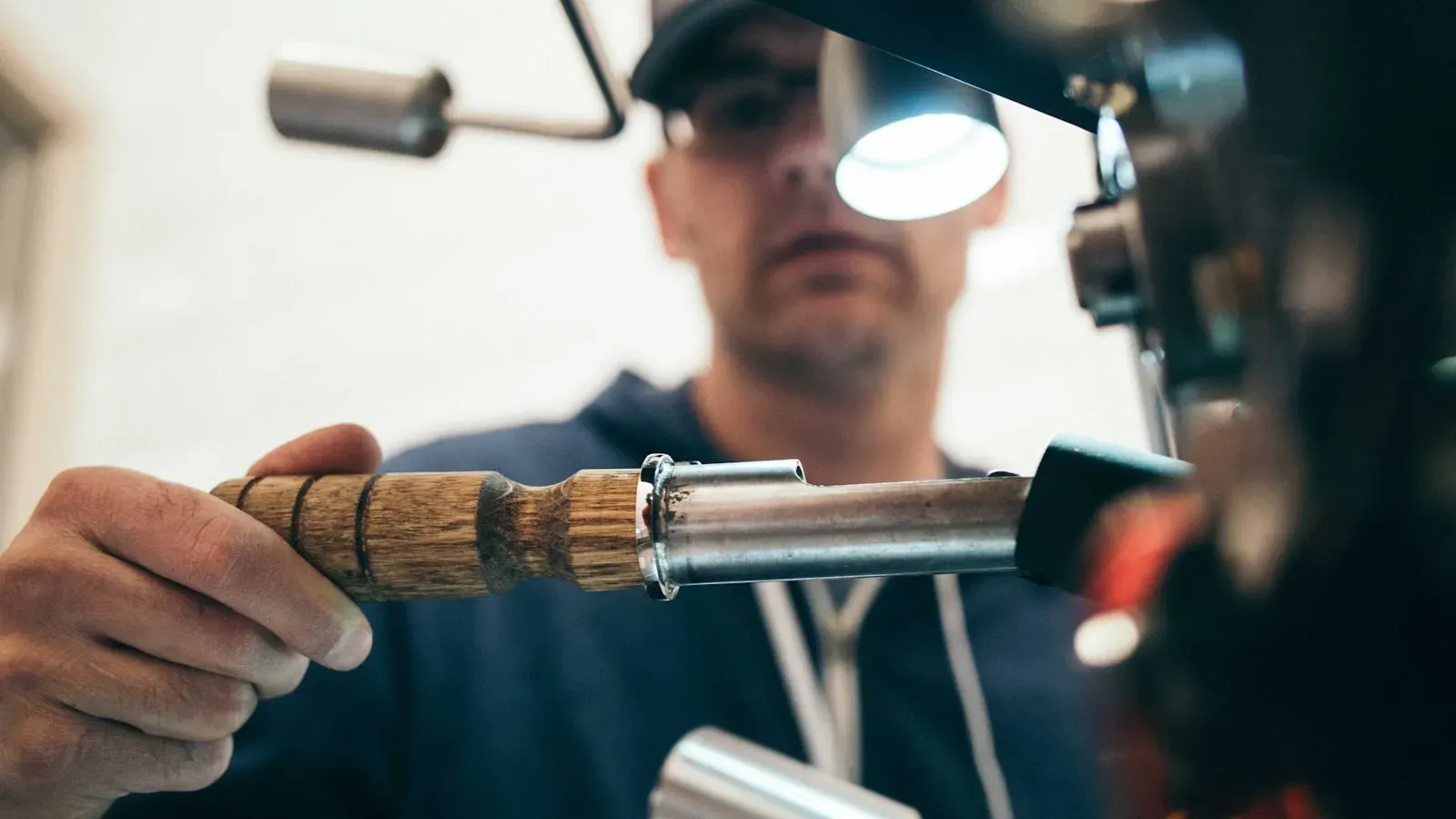
Acetal, nylon, and HDPE account for the majority of industrial plastic components. All three are readily available, reasonably priced, and easy to machine. But they’re not interchangeable—each has distinct strengths and weaknesses that make it optimal for different applications.
This comparison helps you select the right material for your specific requirements.
Quick Comparison
| Property | Acetal | Nylon 6/6 | HDPE |
|---|---|---|---|
| Tensile Strength | 10,000 psi | 12,000 psi* | 4,000 psi |
| Flexural Modulus | 420,000 psi | 410,000 psi* | 145,000 psi |
| Coefficient of Friction | 0.20 | 0.30 | 0.29 |
| Water Absorption | 0.25% | 8.5% | <0.01% |
| Continuous Temp | 180°F | 185°F | 180°F |
| Machinability | Excellent | Good | Good |
| Relative Cost | $$ | $$ | $ |
*Nylon values are for dry material; properties decrease significantly when moisture-saturated.
Acetal (Delrin, POM)
What It Is
Acetal is a semi-crystalline thermoplastic made from polymerized formaldehyde. The material is available in two forms: homopolymer, sold under the Delrin brand name, offers higher strength and stiffness along with better fatigue resistance, though it can develop centerline porosity in thick sections. Copolymer, marketed as Celcon or Ultraform, has slightly lower mechanical properties but better chemical resistance and more uniform properties in thick sections.
Strengths
Acetal’s dimensional stability sets it apart from the competition. With moisture absorption of just 0.25% compared to over 8% for nylon, acetal maintains its dimensions and properties reliably in humid environments. This stability makes it the material of choice when tolerances matter.
The wear resistance of acetal against metal counterfaces is excellent. Combined with a low coefficient of friction, this makes acetal ideal for sliding applications where parts must operate smoothly against steel or aluminum mating surfaces.
Fatigue resistance is another area where acetal excels. It has the best fatigue endurance of common engineering plastics, surviving repeated flexing without cracking. This property matters for snap fits, living hinges, and any application involving cyclic loading.
Machinability is exceptional. Acetal machines cleanly with excellent chip formation and holds tight tolerances without difficulty. See our plastic machining guide for detailed information.
Creep resistance rounds out acetal’s strengths. Under sustained loads, acetal deforms less than nylon or HDPE, making it suitable for structural applications where dimensional stability under load matters.
Weaknesses
Strong acids attack acetal, making it unsuitable for acidic chemical environments. The material burns readily and continues to burn when ignited, so it’s not appropriate for flame-retardant applications without modification. Standard grades degrade in sunlight, requiring UV stabilizers for outdoor use.
Best Applications
Acetal excels in gears and gear racks, bearings and bushings, rollers and wheels, precision mechanical components, pump and valve components, and conveyor parts.
Grades to Know
| Grade | Description |
|---|---|
| Delrin 150 | General purpose homopolymer |
| Delrin 500 | Higher viscosity for extrusion |
| Delrin AF | PTFE-filled for low friction |
| Celcon M90 | General purpose copolymer |
Nylon (Polyamide, PA)
What It Is
Nylon is a family of semi-crystalline polyamides with several common industrial types. Nylon 6/6 is the most common, offering the highest strength and stiffness but also the greatest moisture sensitivity. Nylon 6 has slightly lower properties but better impact resistance and easier processing. Nylon 6/12 absorbs less moisture and offers good chemical resistance, though with lower strength.
Strengths
When dry, nylon 6/6 has the highest tensile and impact strength of common industrial plastics. This strength advantage makes it the first choice for structural applications in controlled environments.
Toughness is another key advantage. Nylon provides excellent impact resistance even at low temperatures, surviving shocks and blows that would fracture more brittle materials.
Abrasion resistance is outstanding in dry environments with abrasive particles like sand or grit. For applications involving sliding contact with abrasive materials, nylon often outperforms other options.
Chemical resistance is good against hydrocarbons, oils, and many solvents, though nylon doesn’t match HDPE’s broad chemical resistance.
The material is self-lubricating, containing inherent lubricity that reduces friction in bearing applications, though not to the same degree as acetal.
Weaknesses
Moisture absorption is nylon’s critical weakness. The material absorbs up to 8.5% moisture by weight, causing dimensional growth of 0.010-0.015 inch per inch, strength and stiffness reductions that can reach 50%, and increased flexibility through plasticization.
Dimensional variability follows from this moisture sensitivity. As humidity changes, nylon parts continuously grow and shrink, making tight tolerances impossible to maintain in uncontrolled environments.
The coefficient of friction at 0.30 is higher than acetal’s 0.20, increasing heat generation and wear in sliding applications.
Best Applications
Nylon works best in structural parts in dry environments, impact-resistant components, abrasion-resistant wear parts for conveyors and guides, electrical insulators, and light-duty self-lubricating bushings.
Grades to Know
| Grade | Description |
|---|---|
| Nylon 6/6 Natural | General purpose, highest properties |
| Nylon 6/6 MoS2 | Molybdenum-filled for lubricity |
| Nylon 6/6 30% GF | Glass-filled for strength and stiffness |
| Nylon 6/12 | Reduced moisture absorption |
| Oil-filled Nylon | Pre-impregnated for bearing use |
Managing Moisture Effects
If you must use nylon in humid environments, several strategies can help. Condition parts to equilibrium before machining and account for final moisture content in your dimensional calculations. Filled grades absorb less moisture than unfilled. Sealed surfaces with paint or coating slow moisture exchange with the environment. When practical, design for dimensional variation rather than fighting it.
HDPE (High-Density Polyethylene)
What It Is
HDPE is a semi-crystalline thermoplastic produced by polymerizing ethylene. It’s the stiffest and strongest member of the polyethylene family, though still significantly weaker than acetal or nylon.
Strengths
Cost is HDPE’s primary advantage. At roughly half the price of acetal or nylon, HDPE makes economic sense when material cost dominates the application requirements.
Chemical resistance is excellent. HDPE resists acids, bases, and many solvents, providing broader chemical resistance than acetal. For chemical containment and exposure applications, HDPE often proves the best choice.
With essentially zero water absorption, HDPE’s properties remain unaffected by moisture. Unlike nylon, HDPE parts maintain their dimensions and properties regardless of humidity.
Standard grades are FDA-compliant for food contact without modification, making HDPE the default choice for food processing applications.
Impact resistance is excellent, with toughness maintained even at low temperatures where other plastics become brittle.
Weldability allows HDPE to be easily joined for fabricated assemblies, enabling construction of tanks, liners, and enclosures from sheet stock.
Weaknesses
Low strength limits HDPE’s applications. At 4,000 psi tensile strength, it’s less than half as strong as acetal or nylon. Parts that must carry significant loads require other materials.
Low stiffness means parts flex and deflect more under load. The flexural modulus of 145,000 psi is about one-third that of acetal or nylon.
Poor wear resistance makes HDPE unsuitable for sliding or bearing applications. Parts will wear rapidly under friction.
Creep under sustained loads exceeds that of acetal or nylon, meaning parts deform over time.
Bonding difficulty requires surface treatment through flame, corona, or plasma processing before adhesive bonding or painting.
Best Applications
HDPE serves well in chemical-resistant linings and tanks, food processing components, cutting boards and work surfaces, low-cost wear strips where precision isn’t critical, electrical insulators, and prototype or low-stress parts.
Grades to Know
| Grade | Description |
|---|---|
| HDPE Natural | General purpose, FDA compliant |
| HDPE Black | UV stabilized for outdoor use |
| UHMW-PE | Related material with superior wear properties |
Decision Framework
Choose acetal when components require dimensional stability, when parts operate against metal in gear, bearing, or bushing applications, when fatigue resistance is needed for repeated flexing, when precise tolerances must be maintained, and when the environment may be humid or wet.
Choose nylon when maximum strength is required and the environment is dry, when impact and toughness are critical, when abrasion resistance is needed, when operating temperature briefly exceeds acetal limits, and when electrical insulation with mechanical strength is required.
Choose HDPE when cost is the primary concern, when chemical resistance is required, when food contact compliance is needed, for low-stress and non-precision parts, and for fabricated or welded assemblies.
Head-to-Head Comparisons
Acetal vs. Nylon for Gears
Winner: Acetal. Acetal’s lower coefficient of friction, better dimensional stability, and superior fatigue resistance make it the standard for plastic gears. Nylon’s moisture absorption causes gear teeth to swell, changing mesh characteristics and causing noise or binding.
Nylon vs. HDPE for Wear Strips
Winner: Depends on load. For light loading where cost matters most, HDPE’s lower price wins. For higher loads or applications where dimensional consistency matters, nylon or UHMW-PE performs better.
Acetal vs. HDPE for Bushings
Winner: Acetal. Acetal’s combination of wear resistance, dimensional stability, and creep resistance makes it far superior for bearing applications. HDPE will wear rapidly and deform under shaft loads.
All Three for Food Contact
All three materials are acceptable for FDA food contact, but they serve different roles. HDPE is most common for cutting boards and containers. Acetal serves precision components that must maintain accuracy. Nylon requires moisture management but works when properly handled.
Filled and Modified Grades
All three materials are available in filled grades for enhanced properties.
| Filler | Effect |
|---|---|
| Glass fiber | Increased strength and stiffness, reduced thermal expansion |
| Carbon fiber | Highest stiffness, improved wear, static dissipative |
| PTFE | Reduced friction, improved wear |
| MoS2 | Reduced friction (nylon) |
| UV stabilizers | Outdoor use capability |
Consider filled grades when base materials don’t quite meet requirements but switching to a different material family isn’t practical.
Related Materials
If none of these three materials fit your requirements, consider alternatives based on what’s missing.
For higher performance in demanding applications, see our guide to PEEK, PPS, and PEI. For lower friction, PTFE and UHMW-PE offer improved sliding characteristics. For higher temperature operation, PEEK, PPS, and Torlon maintain properties above the limits of these three materials. For transparency, polycarbonate and acrylic provide optical clarity.
Working With NextGen Components
We stock and machine all three materials in common forms including sheet, rod, and tube stock. Our capabilities include precision machining to customer specifications along with material selection guidance based on your application requirements.
Questions about which plastic fits your application? Contact our materials team with your requirements.
Ready to Start Your Project?
Contact us to discuss your material and manufacturing needs.
Request a Quote