Tool Steel Selection for Tooling & Dies
Selecting the right tool steel for dies, molds, punches, and cutting tools. Covers A2, D2, O1, S7, H13, and M2 with properties, heat treatment, and guidance.
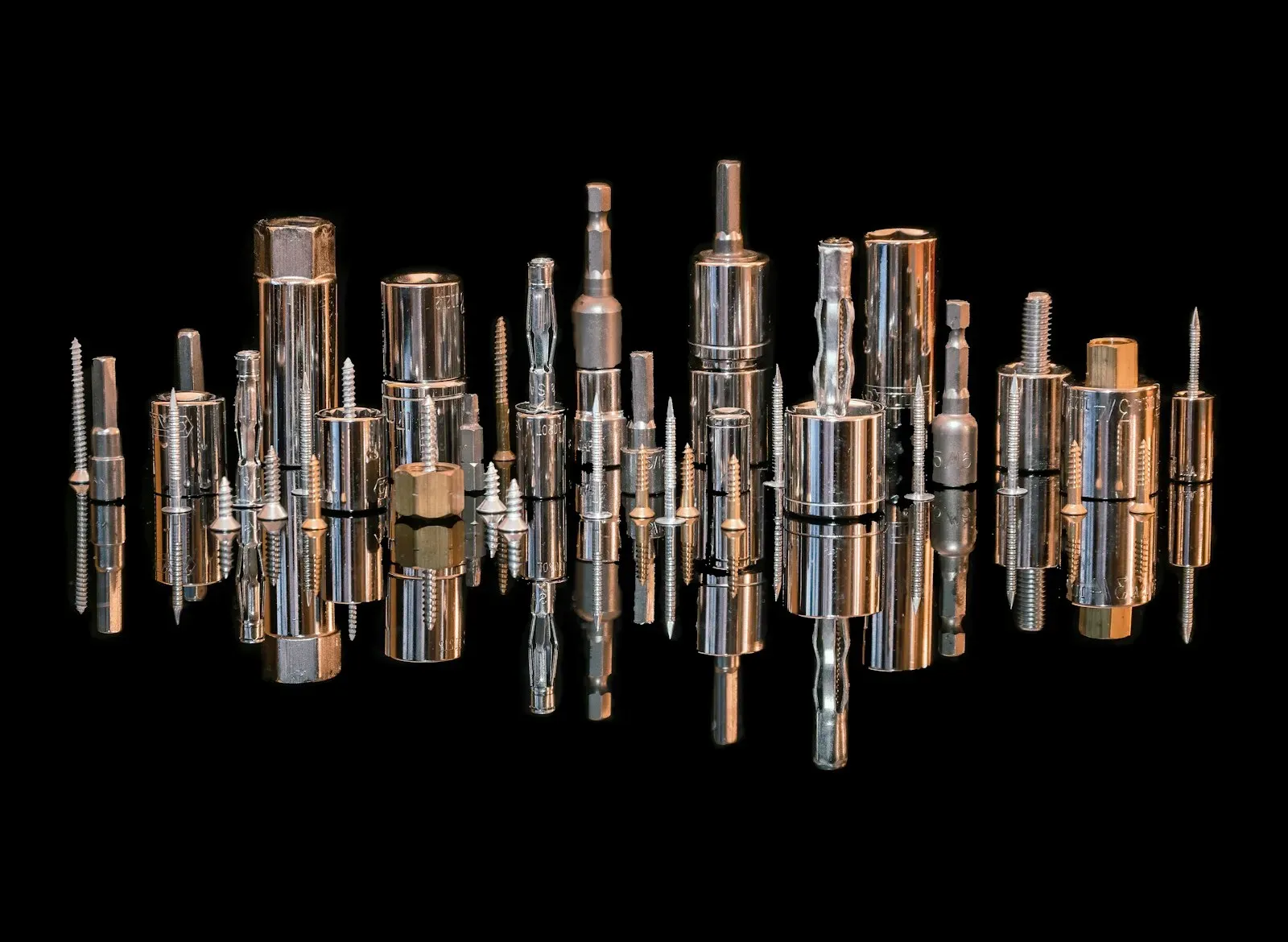
Tool steels are engineered to make tools—dies, molds, cutting tools, and fixtures that shape other materials. Unlike structural steels optimized for strength-to-weight or weldability, tool steels are optimized for hardness, wear resistance, toughness, and thermal stability in specific combinations.
Selecting the right grade requires understanding both the steel’s properties and your application’s demands.
Tool Steel Classification
The AISI classification system groups tool steels by characteristics and quenching method, making it easier to narrow down options before diving into specific grades.
| Category | Prefix | Characteristics |
|---|---|---|
| Water hardening | W | Low cost, shallow hardening |
| Oil hardening | O | Moderate hardening, good all-around |
| Air hardening | A | Deep hardening, minimal distortion |
| High C, high Cr | D | Maximum wear resistance |
| Shock resisting | S | Maximum toughness |
| Hot work | H | Maintains hardness at elevated temp |
| High speed | M, T | Cutting tools, hot hardness |
| Mold steels | P | Plastic injection molds |
Cold Work Tool Steels
These grades serve tooling that operates at or near room temperature, where thermal properties matter less than wear resistance and toughness.
O1 - Oil Hardening
O1 is the general-purpose tool steel for non-critical applications where cost matters more than ultimate performance. It represents the baseline against which other tool steels are often compared.
| Property | Value |
|---|---|
| Carbon | 0.90% |
| Working hardness | 57-62 HRC |
| Wear resistance | Moderate |
| Toughness | Moderate |
| Machinability | Good |
| Dimensional stability | Fair (oil quench) |
This grade finds use in short-run dies, gauges, fixtures, and cutting tools where the application doesn’t justify premium materials. Heat treatment is straightforward: austenitize at 1450-1500°F, oil quench, then temper at 350-450°F for 60-62 HRC.
The advantages are low cost, easy heat treatment that most shops can handle, and good machinability in the annealed state. The trade-off is that oil quenching produces more distortion than air-hardening grades, and wear resistance is merely moderate rather than exceptional.
A2 - Air Hardening
A2 is the workhorse of general-purpose tool steels, offering an excellent balance of properties that makes it the default choice when you don’t have a specific reason to use something else.
| Property | Value |
|---|---|
| Carbon | 1.00% |
| Chromium | 5.00% |
| Working hardness | 57-62 HRC |
| Wear resistance | Good |
| Toughness | Good |
| Machinability | Good |
| Dimensional stability | Excellent |
Blanking dies, forming dies, punches, shear blades, gauges, and master tooling commonly use A2. Heat treatment involves austenitizing at 1750-1800°F, air cooling or slow quenching, then tempering at 350-500°F for 58-62 HRC.
The defining advantage is excellent dimensional stability during heat treatment—parts come out of the furnace very close to their machined dimensions. Combined with good balance across all properties and wide availability, A2 handles most applications well. When maximum wear resistance is specifically required, D2 is the better choice, but for general work A2 is hard to beat.
A6 - Low-Temperature Air Hardening
A6 is similar to A2 but hardens from a lower temperature, reducing distortion even further. This grade serves very intricate tooling where even A2’s dimensional changes are too much.
D2 - High Carbon, High Chromium
When wear resistance trumps all other considerations, D2 is the standard answer. Its high chromium content creates abundant hard carbides that resist abrasion.
| Property | Value |
|---|---|
| Carbon | 1.50% |
| Chromium | 11.50% |
| Working hardness | 58-62 HRC |
| Wear resistance | Excellent |
| Toughness | Low-Moderate |
| Machinability | Poor |
| Dimensional stability | Good |
High-volume blanking dies, slitting knives, forming rolls, lamination dies, and gauges—anywhere maximum wear resistance is needed—specify D2. Heat treatment requires austenitizing at 1850-1875°F, air cooling, then tempering at 300-500°F for 58-62 HRC.
Exceptional wear resistance is the primary advantage, and the high chromium content provides some corrosion resistance—D2 is sometimes called “semi-stainless.” The trade-offs are significant: lower toughness means D2 should not be used for impact applications, and the hard carbides that provide wear resistance also make machining and grinding difficult.
D3 - High Carbon, High Chromium (Oil Hardening)
D3 pushes carbon content even higher than D2 for extreme wear resistance in applications where D2 isn’t enough.
| Property | Value |
|---|---|
| Carbon | 2.25% |
| Chromium | 12.00% |
| Working hardness | 58-64 HRC |
This grade serves applications involving highly abrasive materials where maximum die life justifies the material cost. The limitation is very low toughness—even less forgiving than D2—and difficult machining.
Shock-Resisting Tool Steels
When impact loading is the primary concern, the S-series steels sacrifice some wear resistance for maximum toughness.
S7 - Shock Resisting
S7 delivers maximum toughness with useful working hardness, handling impacts that would crack harder grades.
| Property | Value |
|---|---|
| Carbon | 0.50% |
| Chromium | 3.25% |
| Molybdenum | 1.40% |
| Working hardness | 50-56 HRC |
| Wear resistance | Low-Moderate |
| Toughness | Excellent |
Cold heading dies, knockout pins, chisels, hammers, and punches for thick materials all benefit from S7’s impact resistance. Heat treatment involves austenitizing at 1700-1750°F, air or oil cooling, then tempering at 400-600°F for 54-58 HRC—higher temperatures give lower hardness but more toughness.
The defining advantage is best toughness of common tool steels. When parts must absorb repeated impacts without cracking, S7 is the answer. The corresponding limitation is lower wear resistance, making S7 unsuitable for abrasive conditions where surfaces must resist erosion.
Hot Work Tool Steels
When tooling operates at elevated temperatures—forging, die casting, extrusion—the H-series steels maintain their properties where cold-work steels would soften.
H13 - Chromium Hot Work
H13 is the standard for hot work applications, maintaining useful hardness at temperatures that would ruin cold-work grades.
| Property | Value |
|---|---|
| Carbon | 0.40% |
| Chromium | 5.25% |
| Molybdenum | 1.35% |
| Vanadium | 1.00% |
| Working hardness | 44-52 HRC |
| Hot hardness | Excellent to 1000°F |
| Toughness | Good |
Die casting dies, forging dies, extrusion tooling, hot shear blades, and plastic molds commonly use H13. Heat treatment requires austenitizing at 1850-1900°F, air cooling, then double tempering at 1000-1150°F for 44-50 HRC.
Retained hardness at high temperature is the primary advantage, along with good toughness and excellent resistance to thermal cycling. H13 handles the repeated heating and cooling of die casting cycles without checking. The limitation is lower room-temperature hardness and wear resistance compared to cold-work steels—at room temperature, D2 or A2 would outperform H13.
H11 - Chromium Hot Work
H11 is similar to H13 with slightly lower alloy content, providing lower cost with slightly less hot hardness. It serves applications where H13’s full capability isn’t required.
H21 - Tungsten Hot Work
For temperatures beyond H13’s range, H21 with its tungsten content maintains hardness at higher temperatures. Hot extrusion dies, mandrels, and piercing points that see extreme temperatures specify this grade.
High-Speed Steels
Cutting tools generate heat at the edge, and high-speed steels maintain their hardness at temperatures that would destroy carbon or alloy tool steels.
M2 - Molybdenum High Speed
M2 is the standard high-speed steel for general cutting tool applications, balancing performance with cost.
| Property | Value |
|---|---|
| Carbon | 0.85% |
| Tungsten | 6.00% |
| Molybdenum | 5.00% |
| Chromium | 4.00% |
| Vanadium | 2.00% |
| Working hardness | 62-65 HRC |
| Hot hardness | Excellent |
Drills, taps, end mills, saw blades, and broaches commonly use M2. Heat treatment is demanding: austenitize at 2175-2225°F with critical temperature control, quench, then triple temper at 1025-1050°F. The narrow temperature window and multiple tempering cycles require experienced heat treaters.
The advantage is maintained hardness at cutting temperatures that would soften carbon or alloy steels. The limitations are high material cost, difficult heat treatment, and the reality that carbide tools are often more economical for high-volume production.
M42 - Cobalt High Speed
M42 adds cobalt for superior hot hardness, serving applications cutting difficult materials—stainless steel, titanium, high-temperature alloys—where M2 would soften.
T1 - Tungsten High Speed
T1 is the original high-speed steel composition with higher tungsten content. Performance is similar to M2, and the choice often depends on supplier preference or historical standardization.
Property Comparisons
Understanding how grades rank against each other helps match steel to application:
Wear Resistance (highest to lowest): D3, D2, A2, O1, H13, S7
Toughness (highest to lowest): S7, H13, O1, A2, D2, D3
Machinability in annealed condition (best to worst): O1, H13, A2, S7, D2
Application Selection Matrix
This table provides starting points for grade selection based on application type:
| Application | Primary Property | Recommended Steel |
|---|---|---|
| Blanking dies (general) | Balance | A2 |
| Blanking dies (abrasive) | Wear resistance | D2 |
| Forming dies | Toughness + wear | A2, S7 |
| Punches (thin sheet) | Wear resistance | D2 |
| Punches (thick material) | Toughness | S7, A2 |
| Cold heading dies | Toughness | S7 |
| Die casting dies | Hot hardness | H13 |
| Forging dies | Hot hardness + toughness | H13 |
| Plastic molds | Surface finish | P20, H13 |
| Cutting tools | Hot hardness | M2, M42 |
Heat Treatment Considerations
Pre-hardening Preparation
Before sending parts for heat treatment, machine 0.010-0.015″ oversize for grinding after hardening—heat treatment causes some growth and distortion that must be removed. Relieve machining stresses before hardening with a 1100°F stress relief to minimize distortion. Clean all surfaces thoroughly because contamination causes soft spots where carbon cannot properly diffuse.
Distortion
Different grades distort differently during heat treatment, which affects design and grinding allowances:
| Steel | Relative Distortion |
|---|---|
| A2, A6 | Low |
| D2 | Low-Moderate |
| O1 | Moderate |
| S7 (oil) | Moderate |
| H13 | Low-Moderate |
Air-hardening grades generally distort less because the slower cooling allows stresses to equalize. For more on heat treatment processes, see our heat treatment guide.
Surface Treatments
After hardening, tool steels can receive additional treatments to enhance performance. Nitriding increases surface hardness and wear resistance beyond what the base steel provides. PVD coatings like TiN or TiAlN improve cutting tool performance and life. Chrome plating provides wear and corrosion resistance for molds. These treatments add cost but can dramatically extend tool life in demanding applications.
Working With NextGen Components
We supply tool steel in bar, plate, and pre-machined blanks with common grades in stock including A2, D2, O1, S7, and H13. Pre-hardened materials are available for applications where heat treatment after machining isn’t practical. We machine in both annealed and pre-hardened conditions and coordinate with heat treatment for complete solutions.
Questions about tool steel selection or machining? Contact our team with your application requirements.
Ready to Start Your Project?
Contact us to discuss your material and manufacturing needs.
Request a Quote