Industry 4.0 in the Machine Shop: Real vs Hype
Separating practical Industry 4.0 applications from marketing buzzwords. A realistic look at smart manufacturing that delivers ROI for small and mid-size shops.
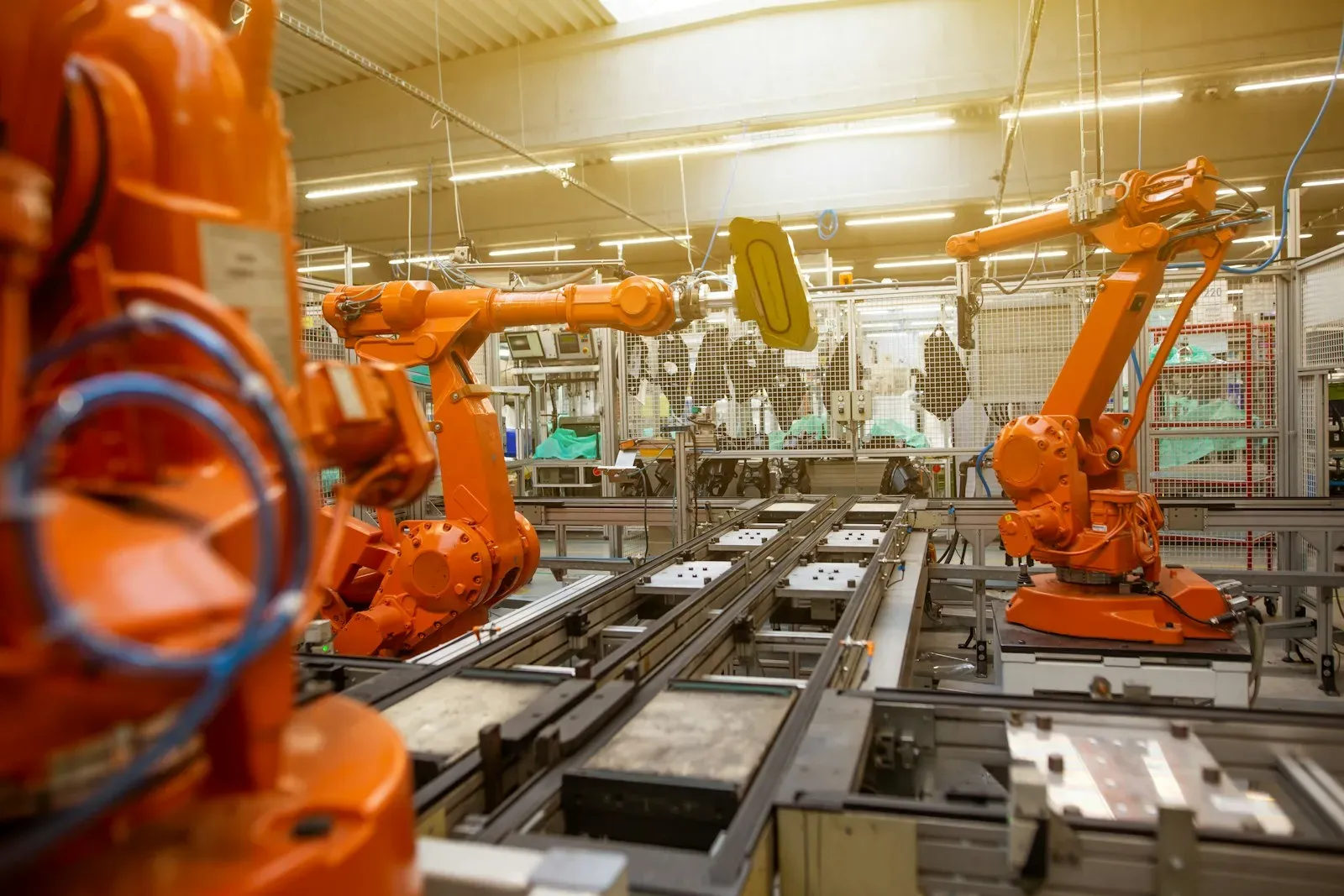
Every manufacturing trade show features “Industry 4.0” and “Smart Manufacturing” in nearly every booth. Promises abound: AI-optimized production, self-correcting machines, lights-out factories. The reality in most shops is considerably more modest—and that’s not necessarily a problem.
This analysis separates technologies that deliver measurable value from those that remain aspirational for typical manufacturing operations.
What “Industry 4.0” Actually Means
The term originated in Germany around 2011, describing the integration of cyber-physical systems into manufacturing. In practical terms, it encompasses connectivity (machines, sensors, and systems communicating via networks), data collection (capturing operational data for analysis), analytics (turning data into actionable insights), and automation (systems acting on insights without human intervention).
The vision is a closed loop: machines sense their environment, data systems analyze what’s happening, and automated responses optimize operations continuously.
Technologies That Deliver Today
Machine Monitoring
Machine monitoring forms the foundation of smart manufacturing and offers the clearest ROI for most shops. These systems track machine state—whether running, idle, in setup, or under maintenance—while recording cycle times and comparing them to expected values. They capture downtime reasons and duration, then calculate OEE (Overall Equipment Effectiveness) to give you a comprehensive picture of production efficiency.
The reason machine monitoring works so well is simple: most shops don’t know their true utilization. When asked, managers typically estimate 60-70%. Actual measured utilization often reveals 35-50%. That gap represents enormous opportunity.
In terms of realistic ROI, machine monitoring typically identifies 15-30% utilization improvement opportunities within the first year. For a $150/hour machine, that translates to $50,000 or more annually in recovered capacity—often 10x or more the monitoring system cost. Modern systems connect to machine controls via MTConnect or adapters, requiring minimal integration effort. Cloud platforms handle data storage and visualization. Expect to spend $100-300 per machine monthly depending on features.
Predictive Maintenance
Predictive maintenance moves shops from scheduled or reactive maintenance to condition-based maintenance. These systems monitor vibration signatures for bearing degradation, track spindle temperature and current draw, detect coolant concentration changes, and identify tool wear patterns before they cause problems.
The business case is compelling: unplanned downtime costs 5-10x more than planned maintenance. Catching a failing spindle bearing before catastrophic failure saves the bearing replacement cost, prevents spindle damage, and avoids production interruption.
Payback depends on equipment value and failure history. Shops with high-value equipment—5-axis machines, Swiss-type lathes—see faster returns. One prevented catastrophic failure often pays for years of monitoring. These systems can be standalone sensors or integrated with machine monitoring, though vibration analysis requires baseline establishment and threshold tuning. Expect 3-6 months before the system reliably predicts failures.
Digital Quality Documentation
Replacing paper travelers and inspection records with digital systems has become practical and valuable. These systems capture inspection data at the point of measurement, link measurements to serial numbers and operations, generate certificates and reports automatically, and enable traceability without the paper chase.
Quality documentation consumes significant time in regulated industries. Digital systems eliminate transcription errors, reduce documentation time by 50-70%, and make audits dramatically easier. For shops serving customers with stringent quality requirements, documentation labor savings alone often justify the investment. Reduced audit prep time and nonconformance investigation effort add additional value.
Implementation ranges from simple measurement data capture (gages connected to tablets) to full MES (Manufacturing Execution System) integration. Starting with inspection data capture and expanding as processes mature is typically the wisest approach.
Tool Management Systems
Systematic tracking of tool inventory, usage, and performance pays dividends beyond what most shops expect. These systems track tool inventory and location, record tool usage by job and machine, monitor tool life and performance, and automate reorder triggers.
Tool costs represent only 3-5% of manufacturing costs but influence 25-30% of total costs through machine downtime and quality issues. Most shops don’t know their true tool consumption or which tools perform best. Typical savings run 15-25% on tooling spend through reduced hoarding, better life tracking, and data-driven standardization. Setup time reduction from organized tool storage provides additional benefit.
Technologies Still Maturing
Adaptive Machining
Adaptive machining promises real-time adjustment of cutting parameters based on sensor feedback—machines optimizing feeds and speeds continuously based on spindle load, vibration, and surface finish measurements.
The current reality is more nuanced. Adaptive machining works well for specific applications, particularly structural parts with varying stock conditions, but requires significant setup and tuning. It’s not practical for job shop environments with constantly changing parts. This technology makes sense for high-value parts with significant material removal, consistent part families, and production volumes that justify the setup investment.
AI-Driven Process Optimization
Machine learning systems that recommend or implement process improvements sound compelling. The promise is that AI analyzes production data and identifies optimization opportunities humans miss.
However, these systems require massive data sets to train effectively. Most shops don’t have enough data on any single part to enable meaningful learning, and the results are often obvious to experienced machinists anyway. AI-driven optimization makes sense for high-volume production of consistent part families where small efficiency gains compound across millions of cycles.
Autonomous Quality Inspection
Vision systems and automated CMMs replacing human inspectors promise 100% inspection without labor cost, perfect repeatability, and immediate feedback. In practice, they work well for simple geometric features and surface defects, but complex GD&T evaluation still requires human interpretation, and first-article inspection remains largely manual.
Autonomous inspection makes sense for high-volume production with simple features and surface defect detection, but it’s not yet practical for complex low-volume work.
What’s Still Hype
Fully Autonomous Production
The lights-out factory running without human intervention remains elusive for job shops. Even highly automated operations require setup and programming for new jobs, exception handling when things go wrong, quality decisions on borderline conditions, and maintenance and troubleshooting. Automation can extend unattended operation but cannot eliminate skilled human involvement for varied production.
Digital Twins for Every Part
Creating a complete virtual replica of physical production sounds powerful but demands accurate process models for every operation, real-time data integration across all systems, and validation that simulation matches reality. For high-volume production programs running millions of parts, the investment may be justified. For job shops making hundreds of different parts annually, it’s impractical.
Blockchain for Traceability
Distributed ledger technology for material and process traceability has been proposed but offers little advantage over traditional databases for most applications. The overhead of blockchain—computational cost, complexity—isn’t justified when the supply chain is known and trusted.
Practical Implementation Strategy
Phase 1: Visibility (Months 1-6)
Implement machine monitoring across critical equipment with a focus on understanding current state (utilization and downtime reasons), establishing baselines for improvement measurement, and building organizational capability to use data. Budget $200-500 per machine for hardware plus $100-200 per machine monthly for software.
Phase 2: Optimization (Months 6-18)
Use visibility data to drive targeted improvements by addressing top downtime causes, standardizing best practices identified from data, and implementing predictive maintenance for high-value equipment. Investment includes process improvement effort plus $50-150 per machine monthly for predictive maintenance.
Phase 3: Automation (Month 18+)
Based on improvement trajectory, selectively automate through digital quality documentation, tool management integration, and automated inspection for appropriate applications. Investment varies considerably based on scope; justify each element individually.
Vendor Selection Considerations
The smart manufacturing vendor landscape is crowded and confusing. When evaluating options, consider integration capability first—does it work with your existing machines, including older equipment? Data ownership matters: who owns your data, can you export it, and what happens if you change vendors?
Scalability is critical: can you start small and expand, or do many enterprise systems require all-or-nothing implementation? Support becomes essential when things don’t work—local integration partners often matter more than vendor headquarters. Finally, examine track record by asking how many similar shops have successfully implemented and requesting references you can actually call.
Working With NextGen Components
We’ve invested in manufacturing technology that benefits our customers directly. Machine monitoring across our production equipment ensures delivery reliability. Digital quality documentation enables rapid certificate generation. Tool management systems ensure consistent quality.
These investments mean more predictable lead times and comprehensive documentation for your orders. Questions about our capabilities? Contact our team.
Ready to Start Your Project?
Contact us to discuss your material and manufacturing needs.
Request a Quote