Brass vs Bronze vs Copper: A Selection Guide for Engineers
When to use brass, bronze, or copper? This comparison covers the key differences in composition, properties, and applications to help you select the right copper alloy for your project.
Copper alloys form a large family with overlapping properties and confusing naming conventions. Is “naval brass” actually brass? (Yes, but it contains tin.) What’s the difference between aluminum bronze and manganese bronze? (One contains aluminum, the other doesn’t contain manganese—it’s an old misnomer.)
This guide cuts through the confusion to help you select the right copper alloy based on what your application actually requires.
The Three Families
The copper alloy family divides into three main branches. Pure copper (greater than 99.3% Cu) is optimized for electrical and thermal conductivity above all else. Brass refers to copper-zinc alloys, valued for their machinability, attractive appearance, and moderate strength. Bronze originally meant copper-tin alloys, but modern usage extends to any copper alloy that isn’t brass—generally harder and more corrosion-resistant than brass.
Quick Comparison
| Property | Copper (C11000) | Brass (C36000) | Bronze (C93200) |
|---|---|---|---|
| Tensile Strength | 32 ksi | 55 ksi | 35 ksi |
| Yield Strength | 10 ksi | 25 ksi | 18 ksi |
| Hardness (BHN) | 40 | 80 | 65 |
| Electrical Conductivity | 101% IACS | 28% IACS | 12% IACS |
| Machinability Rating | 20 | 100 | 70 |
| Relative Cost | $$ | $ | $$ |
When to Use Copper
Pure copper excels when conductivity—electrical or thermal—is the primary requirement.
Electrical Conductivity
C11000 (Electrolytic Tough Pitch Copper) is the industry standard for electrical applications. You’ll find it in bus bars and electrical connectors, motor windings, electrical contacts, and grounding systems. Nothing else comes close in performance. Silver is slightly more conductive but vastly more expensive. Aluminum is lighter and cheaper but provides only 61% of copper’s conductivity.
Thermal Conductivity
Copper’s exceptional thermal conductivity of 226 BTU/hr·ft·°F makes it the natural choice for heat exchangers, heat sinks, cooling system components, and soldering iron tips. When heat needs to move efficiently, copper is usually the answer.
When Not to Use Copper
Pure copper falls short when your application demands strength, machinability, wear resistance, or structural rigidity. Copper yields at only 10 ksi, machines poorly with gummy chip formation, wears quickly against harder materials, and deflects readily under load. When these properties matter, you need to move to a copper alloy.
When to Use Brass
Brass solves copper’s machinability problem while retaining useful conductivity and corrosion resistance.
Free-Machining Brass
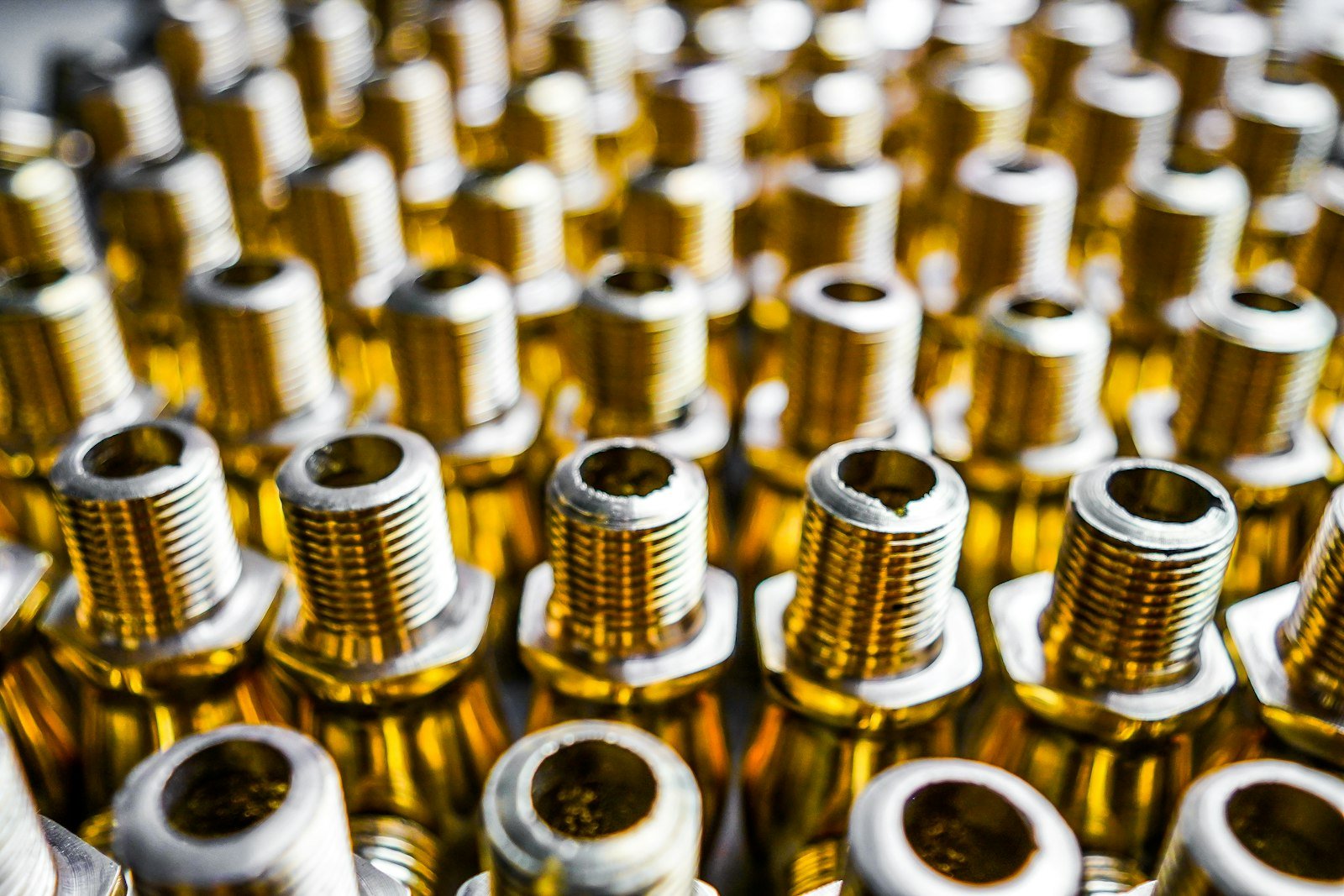
C36000 (Free-Cutting Brass, commonly called 360 Brass) defines the machinability standard that all other metals are measured against. Composed of 61.5% copper, 35.5% zinc, and 3% lead, it earns a machinability rating of 100 and excels in high-volume screw machine work. This alloy dominates production of fittings, valves, fasteners, electrical terminals, and decorative hardware.
Naval Brass
C46400 (Naval Brass) adds tin for improved corrosion resistance, with a composition of 60% copper, 39.25% zinc, and 0.75% tin. The tin addition resists dezincification in seawater and provides higher strength than cartridge brass. Marine hardware, propeller shafts, and condenser plates commonly specify naval brass.
Architectural Brass
C26000 (Cartridge Brass) balances formability and appearance at 70% copper and 30% zinc. It offers excellent cold working properties and delivers the warm golden color that people expect from “brass.” Musical instruments, ammunition cases, and decorative hardware rely on this alloy.
When Not to Use Brass
Brass reaches its limits when you need high strength (most brasses top out around 60 ksi tensile), wear resistance (brass is too soft for bearing surfaces), extreme corrosion resistance (some brasses suffer dezincification), or electrical conductivity (which drops significantly from pure copper). For these requirements, consider bronze or pure copper.
When to Use Bronze
Bronze encompasses a diverse group of alloys, each optimized for specific requirements.
Phosphor Bronze
C51000 (Phosphor Bronze 5% A) and C54400 (Free-Cutting Phosphor Bronze) deliver excellent fatigue resistance, good corrosion resistance, and spring properties superior to brass. These alloys serve in electrical springs, fasteners, bellows, marine hardware, and musical instrument strings.
Bearing Bronze
C93200 (SAE 660, High-Leaded Tin Bronze) is the standard industrial bearing material. Its self-lubricating properties come from embedded lead that provides lubricity, while the bronze matrix offers excellent wear characteristics against steel. You’ll find it in bushings, bearings, gears, and wear plates throughout heavy industry.
Aluminum Bronze
C95400 and C95500 achieve the highest strength of any copper alloys, exceeding 90 ksi tensile. They combine this strength with excellent corrosion resistance (especially in marine environments) and resistance to wear and galling. Marine propellers, valve stems, pump components, and heavy-duty bearings commonly specify aluminum bronze.
Silicon Bronze
C65500 stands out for its excellent weldability combined with high strength and resistance to stress corrosion cracking. Pole line hardware, marine hardware, and fasteners for wood construction (where it resists corrosion from tannic acid) rely on silicon bronze.
Manganese Bronze
C86500, despite its name, contains little actual manganese—the term is a historical misnomer. This alloy is actually a high-strength brass with 65 ksi yield strength and good corrosion resistance. It serves in heavy-duty gears, valve stems, and strut bushings.
Application-Based Selection
Bushings and Bearings
| Application | Recommended Alloy | Why |
|---|---|---|
| Light-duty bushings | C93200 (SAE 660) | Good wear, self-lubricating |
| Heavy loads | C95400 (Al Bronze) | Higher strength and hardness |
| High-speed rotation | C93700 | Higher lead for lubricity |
| Corrosive environment | C95500 | Superior corrosion resistance |
Marine Applications
| Component | Recommended Alloy | Why |
|---|---|---|
| Propellers | C95800 | Strength + seawater resistance |
| Hardware | C65500 | Strength + weldability |
| Fasteners | C65100 | Corrosion resistance + workability |
| Shaft sleeves | C95400 | Wear + corrosion resistance |
Electrical Components
| Requirement | Recommended Alloy | Conductivity |
|---|---|---|
| Maximum conductivity | C11000 (Copper) | 101% IACS |
| Conductivity + strength | C17200 (Be-Cu) | 22% IACS |
| Conductivity + spring | C51000 (Phos Bronze) | 15% IACS |
| Machinability + conductivity | C36000 (Brass) | 28% IACS |
Valve and Fitting Components
| Component | Recommended Alloy | Why |
|---|---|---|
| Valve bodies | C83600 (Ounce Metal) | Castability + pressure tight |
| Stems | C46400 (Naval Brass) | Corrosion + machinability |
| Seats | C95400 (Al Bronze) | Wear resistance |
| Handles | C36000 (Free-Cut Brass) | Machinability + appearance |
Machining Characteristics
The easiest copper alloys to machine are C36000 (Free-Cutting Brass) with its benchmark machinability rating of 100, followed by C35300 (High-Leaded Brass) at 90 and C54400 (Free-Cut Phosphor Bronze) at 80. These alloys produce small, easily-managed chips and allow high cutting speeds.
More challenging materials include C11000 copper (machinability rating 20) with its gummy, stringy chip formation, C95400 aluminum bronze (rating 60) which work hardens during cutting, and C51000 phosphor bronze (rating 20) which also produces stringy chips. These materials require careful tooling selection and may need reduced cutting speeds.
For general machining guidance, see our DFM rules for CNC machining.
Corrosion Considerations
Dezincification
Brasses containing more than 15% zinc can suffer dezincification in certain water chemistries. In this process, zinc selectively dissolves from the alloy, leaving behind weak, porous copper. You can prevent dezincification by specifying low-zinc brasses (under 15% Zn), inhibited brass alloys (arsenical brass), naval brass (which includes tin), or bronze (which contains no zinc).
Galvanic Corrosion
Copper alloys sit on the noble (cathodic) end of the galvanic series relative to steel, aluminum, and zinc. When copper alloys contact these metals in the presence of an electrolyte, the less-noble metal will corrode preferentially. Always isolate copper alloys from active metals in assemblies where moisture may be present.
Stress Corrosion Cracking
Certain brasses are susceptible to cracking when stressed in ammonia-containing environments. Where ammonia exposure is possible, specify silicon bronze or phosphor bronze instead.
Cost Comparison
Relative raw material costs vary with market conditions, but typical relationships hold:
| Material | Relative Cost |
|---|---|
| C36000 Free-Cutting Brass | 1.0x |
| C26000 Cartridge Brass | 1.0x |
| C11000 Copper | 1.1x |
| C93200 Bearing Bronze | 1.2x |
| C51000 Phosphor Bronze | 1.3x |
| C95400 Aluminum Bronze | 1.4x |
Remember that machining cost often dominates total part cost. Free-machining brass’s 5x machinability advantage over copper can more than offset its material cost for complex parts requiring extensive machining.
Working With NextGen Components
We stock a range of copper alloys in bar, plate, and tube forms, including free-cutting brass for high-volume machining, bearing bronzes for wear applications, phosphor bronze for spring and electrical applications, aluminum bronze for marine and heavy-duty use, and pure copper for electrical applications.
Not sure which alloy fits your application? Contact our materials team with your requirements—load, environment, mating materials, and functional needs—and we’ll recommend appropriate options.
Ready to Start Your Project?
Contact us to discuss your material and manufacturing needs.
Get a Quote